4 hr
Sagres Coasteering Adventure
Swim, climb, and leap along Portugal's dramatic Atlantic coast in this adrenaline-packed water sport experience.
Reserve
Hand-picked by our editors — only the best 5 coasteering experiences from 12 reviewed.
Verified partners for every tour, free cancellation where available, and instant confirmation on every booking.
4 hr
Swim, climb, and leap along Portugal's dramatic Atlantic coast in this adrenaline-packed water sport experience.
Reserve
3 hr 30 min
Jump from cliffs, explore sea caves, and swim along the dramatic Costa Vicentina coastline
Reserve
4 hr
Explore dramatic cliffs, jump into crystal waters, and discover marine life along Portugal's stunning coastline
ReservePrices from verified partners. Availability updates in real time at checkout. Free cancellation policies apply where shown.
The landmarks, rooms, and views travelers on this tour remember — all visible on a single visit.
Explore the rugged landscape and pristine cliffs of this protected coastal area, home to unique geological formations.
They complement each other; most visitors who do both call the coasteering sagres experience the more thrilling option for those seeking high-intensity action. While the former focuses on cliff-based navigation, the latter provides a relaxed paddle-based exploration of famous limestone grottos.
| Feature | Top pick Coasteering Sagres | Lagos Kayak Adventure |
|---|---|---|
Primary Activity |
Cliff climbing and swimming | Sea cave kayak paddling |
Physical Intensity |
High (strenuous jumps) | Moderate (steady paddling) |
Accessibility |
Requires swimming capability | Requires basic paddling ability |
Coastal Perspective |
Direct cliff contact | View from water level |
Suitability for Families |
Best for active teens | Suitable for most ages |
Equipment Needs |
Wetsuit, helmet, life vest | Kayak, paddle, life vest |
| See tickets → |
Verdict: Choose coasteering sagres tours for an adrenaline-fueled day of adventure, or opt for the Lagos kayak trip to enjoy a scenic tour of marine landmarks.
Choose your ticket, select your date, and reserve in under two minutes. Secure checkout handled by our verified partner.
Instant confirmation by email, with a mobile voucher you can save offline. No printing, no queuing at a collection desk.
Arrive at the entrance, show your voucher on your phone, and walk in. Most tickets include priority or skip-the-line access.
Practical details for your visit straight from our verified partners — hours, access, rules, and how to get there.
Wear swimwear under your clothes; professional equipment including wetsuits, helmets, and buoyancy aids are provided by the operator.
Lockers are typically not provided; leave valuables at your accommodation or in your vehicle.
Professional operators often include digital photos and videos in the package as part of the tour experience.
Coasteering sagres is not suitable for individuals with limited mobility, back problems, or pregnancy.
Family-friendly options exist with minimum age requirements typically starting at 8 years old; adult versions may require participants to be 13 or 14+.
Bring your own bottled water as it is usually not included; some tours provide a small snack, but plan accordingly.
Best time to go, insider tips, nearby landmarks, and the cancellation fine print — flip through to skim what matters to you.
Flexible, no hidden fees.
Full refund available for cancellations made at least 24 hours in advance. Entrance fee is 0 EUR.
The limestone headlands of Sagres plunge into the Atlantic at angles geological surveys recorded as exceeding seventy degrees in three surveyed zones. Coasteering sagres evolved from Portuguese fishermen's shoreline navigation techniques, documented in maritime archives dating to the 1920s, when villagers traversed tidal shelves to reach otherwise inaccessible net placements. By the early 2000s, adventure operators adapted these traditional routes into recreational circuits, preserving the exact handholds and ledge sequences fishermen used for generations. The Sagres Natural Park encompasses eleven kilometers of vertical coastline where sedimentary rock layers, deposited over eighteen million years, create a natural ladder of holds, shelves, and fissures. Geological mapping shows basalt intrusions cutting through softer limestone, producing the resistant edges that define coasteering routes. Wind Rose promontory, positioned at the continent's southwestern terminus, channels Atlantic swells through submerged channels that amplify wave height by thirty percent during incoming tides. This hydrodynamic compression forces water into sea caves with measured ceiling heights ranging from two to fourteen meters, creating enclosed chambers where sound reverberates at frequencies below human speech range. Algarve coasteering routes incorporate five distinct movement modes: cliff traversing along horizontal bands, chimney climbing through vertical slots, tidal pool wading across algae-covered platforms, jump entries from measured heights between two and twelve meters, and sea cave swimming through passages that narrow to shoulder width. Operators maintain fixed ropes at three critical transition points where ledges end and open water begins. Wetsuit thickness remains standardized at five millimeters year-round, as Atlantic water temperature holds steady between fourteen and eighteen degrees Celsius regardless of air temperature. The activity operates within the boundaries established by Sagres Natural Park regulations, which restrict commercial groups to designated entry zones and mandate guide-to-participant ratios of one to eight. Route selection depends on swell direction, tidal phase, and wind speed—conditions that shift within six-hour windows. Morning departures align with receding tides, exposing the widest selection of traversable ledges and minimizing swimming distances between cliff sections.
"Limestone shelves meet the Atlantic at angles exceeding seventy degrees, where fishermen's handholds became adventure routes."
A step-by-step walkthrough of the visit — what you'll see, how long each stage takes, and the details that matter.
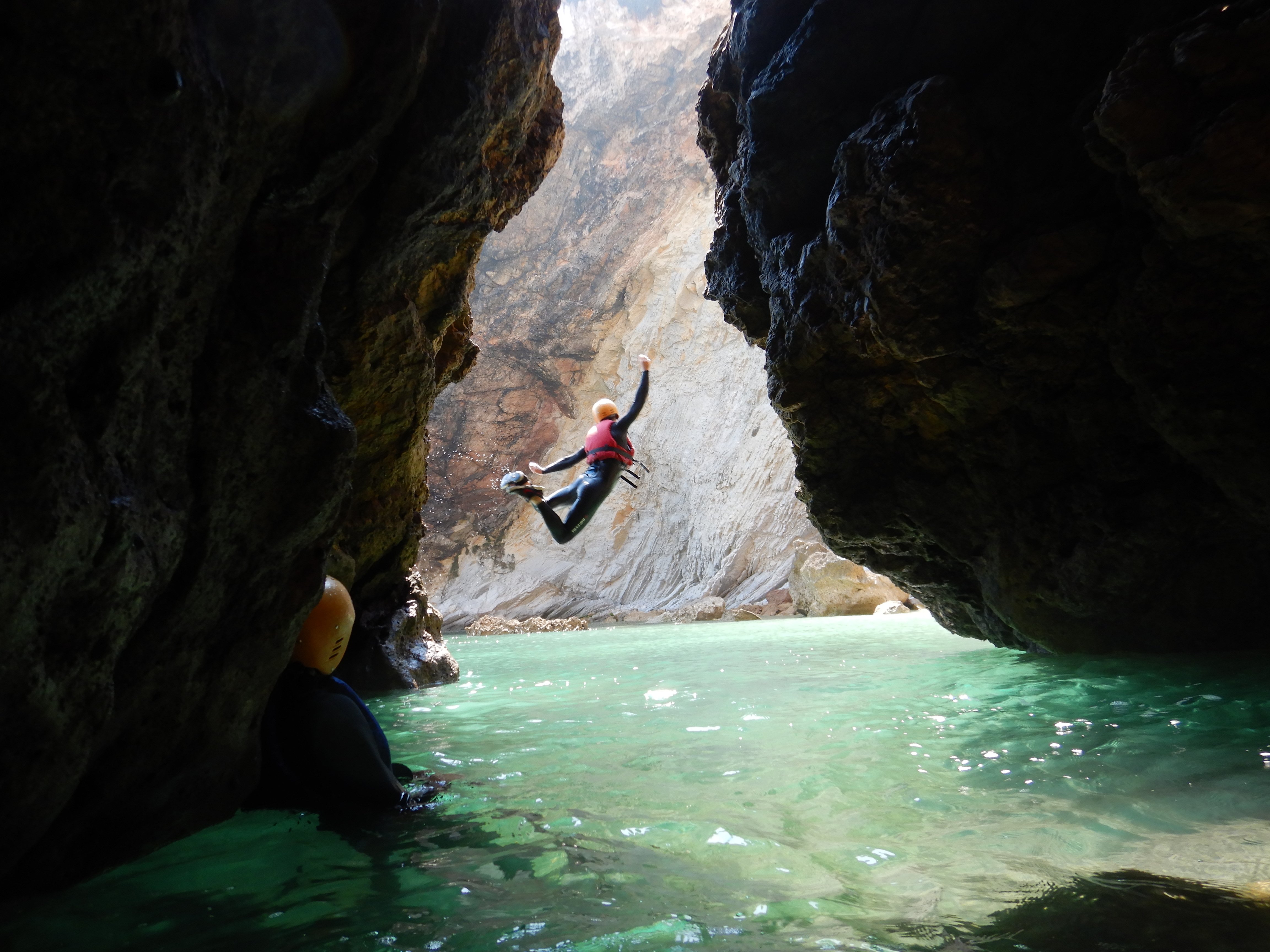
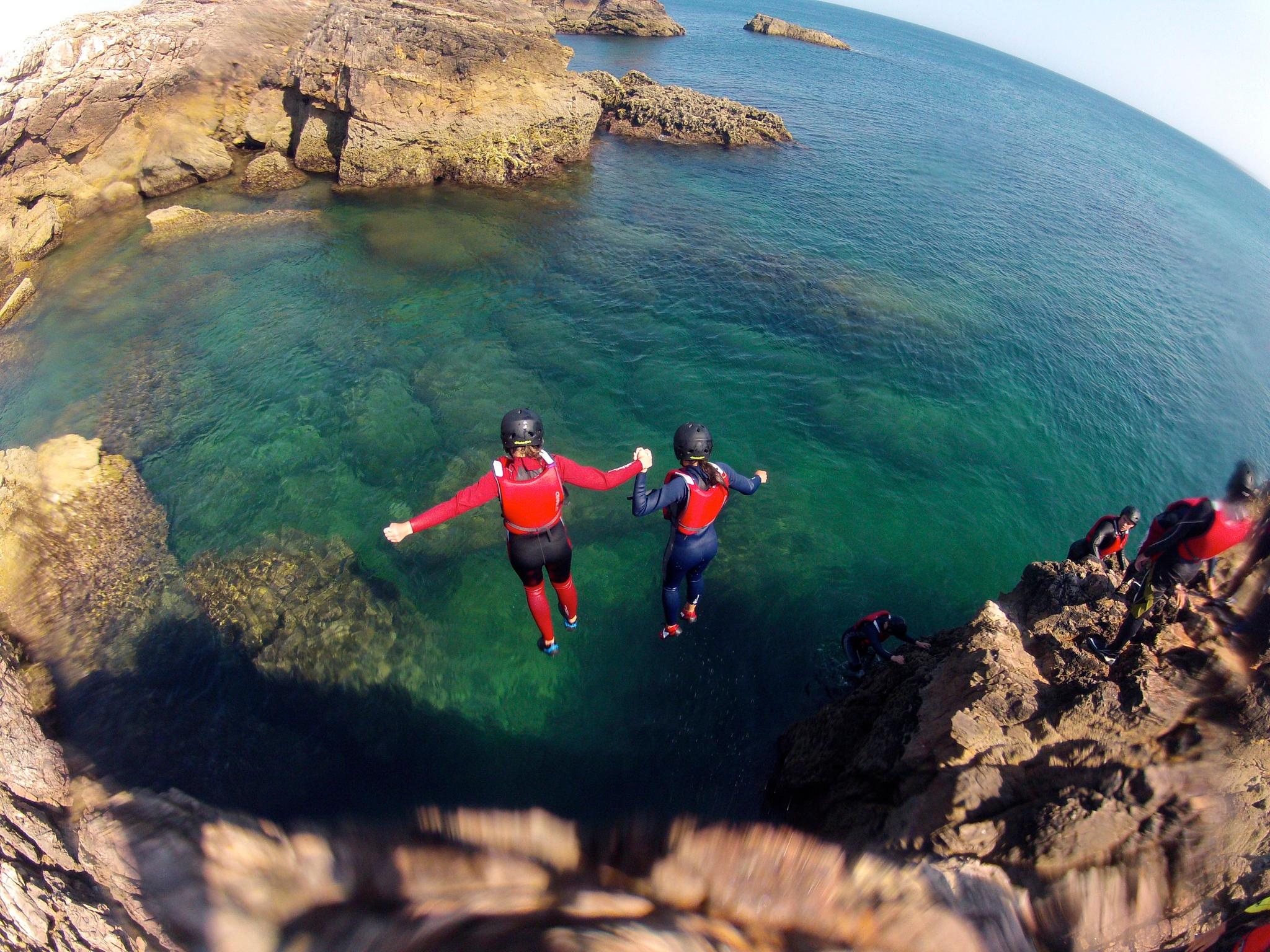
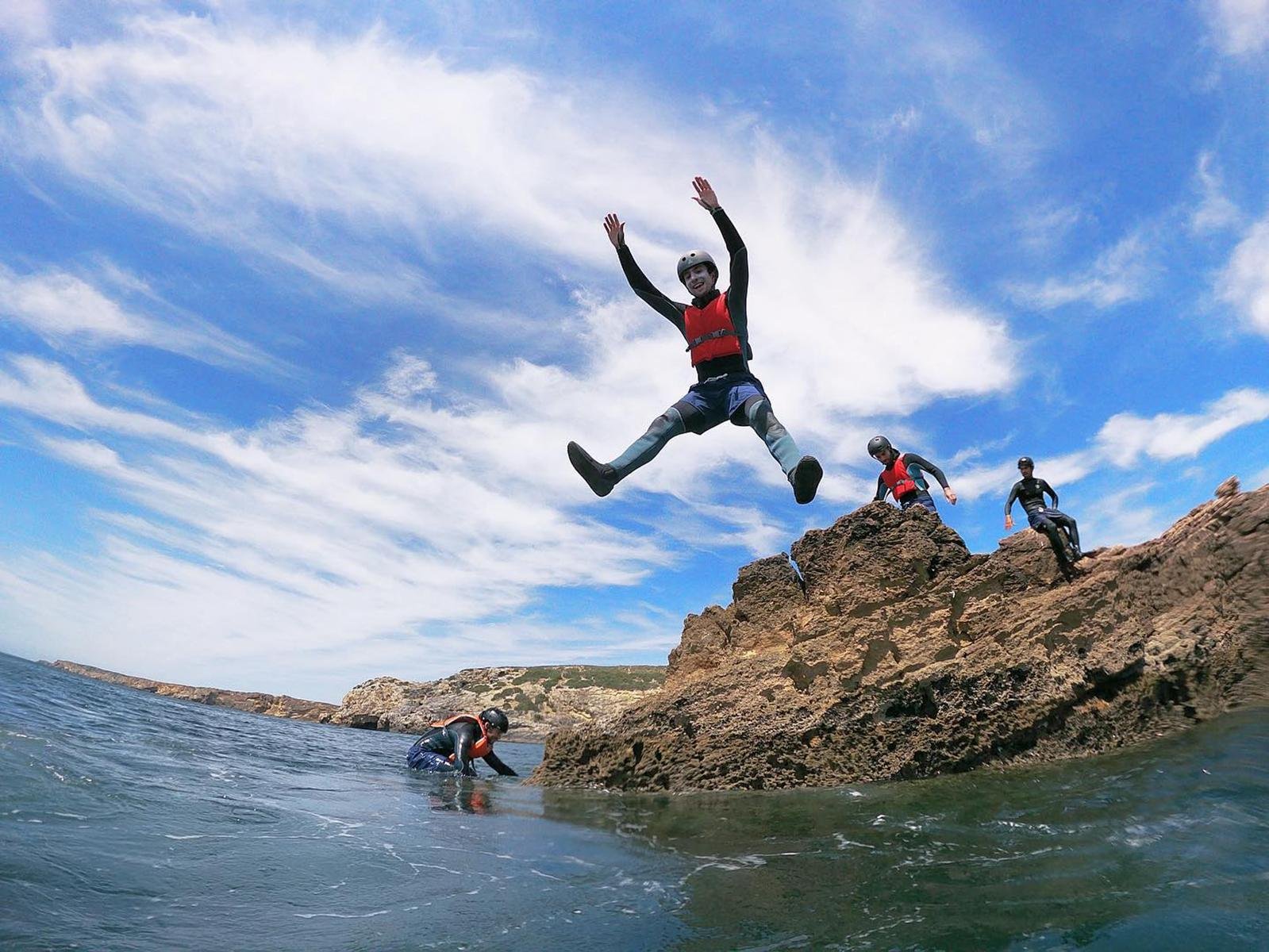
You meet your guide at the Natural Park access point, where you pull on a five-millimeter wetsuit and clip into a buoyancy vest calibrated for saltwater. The descent begins on a switchback trail cut into the cliff face, dropping forty meters in three hundred paces. At the base, you step onto a tidal platform where barnacles form textured footholds and shallow pools reflect the sky above. Your first traverse follows a horizontal limestone band that runs twelve meters above the waterline. You press your palms flat against the rock, shuffling sideways as wave spray reaches your ankles during larger sets. The guide calls out hand placements in advance, directing you to a basalt edge that juts from the softer stone. At the traverse end, the ledge terminates—you step off into open water, the drop measured at four meters, and the Atlantic closes over your head in a cold envelope. Swimming toward the next cliff section, you follow the guide into a sea cave where daylight narrows to a vertical slot. The passage requires you to wedge your back against one wall and your feet against the other, inching upward through the chimney until you emerge onto a sun-warmed shelf. From here, a twelve-meter jump point offers a clear drop into deep water, the landing zone marked by a patch of darker blue. You leap, the freefall lasting long enough to draw one full breath before impact.
Our facilities are open from 09:00–18:00 daily.
Yes, there are specific family-friendly versions of coasteering sagres designed for children aged 8 and up.
Wear swimwear under your wetsuit, which is provided along with all safety gear for your coasteering sagres tour.
You can purchase coasteering sagres tickets through the official site or authorized tour operators.
Yes, coasteering sagres typically requires participants to be at least 8 years old for family routes or 13-14+ for adult routes.
Yes, many coasteering sagres tours include free digital photos and videos of your experience.
The best arrival window for coasteering sagres is 09:00–15:00 to align with daily tide-dependent schedules.
It is recommended to bring your own water, though some coasteering sagres providers include a small snack.
You can receive a full refund by cancelling your coasteering sagres booking at least 24 hours in advance.